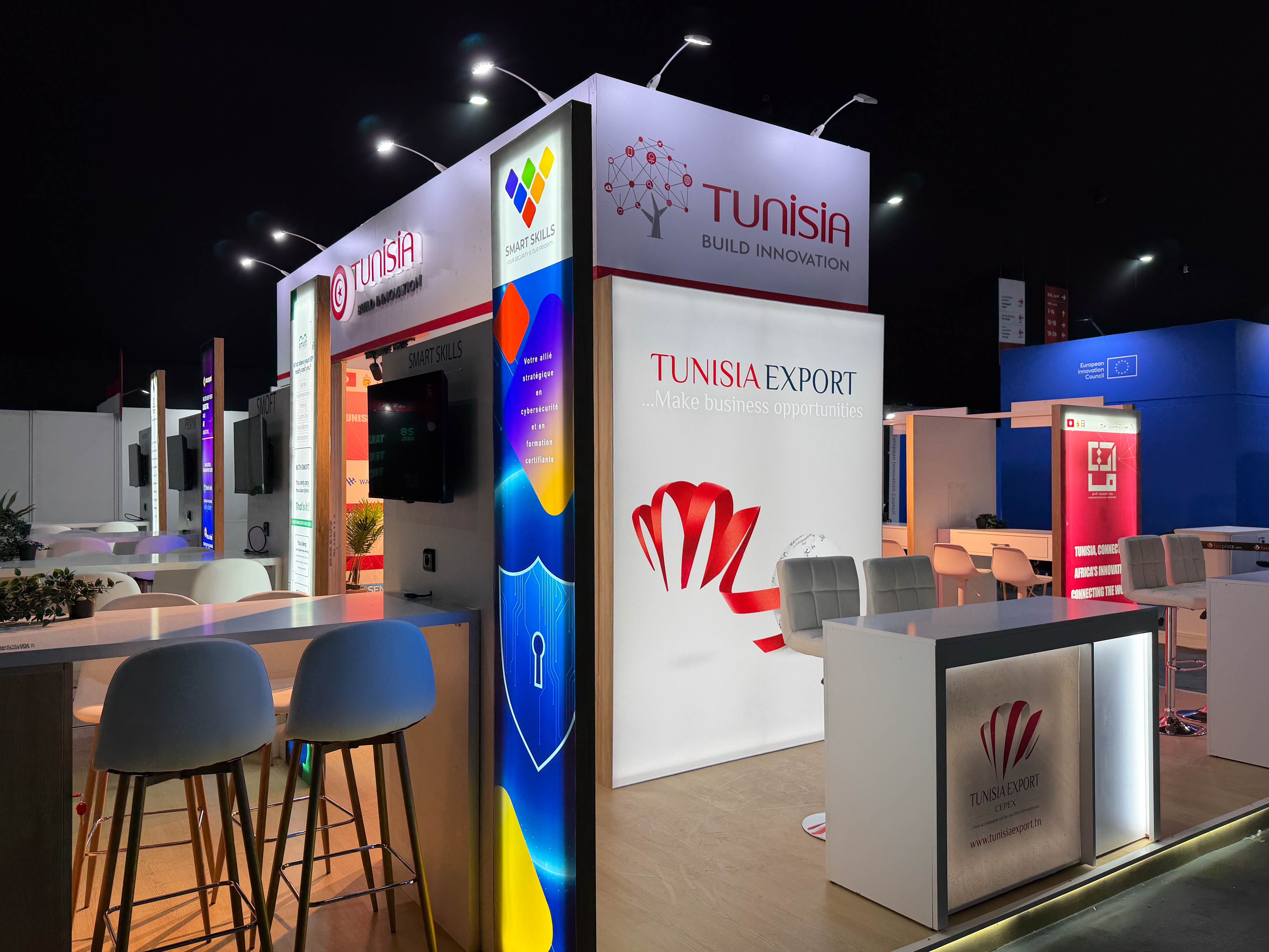
When EFFECT Global received the brief for the Tunisia National Pavilion at GITEX Africa 2026, the mandate was clear: create a presence that would not simply occupy floor space at Africa's largest technology trade show, but command it. The pavilion had to be immediately identifiable, architecturally distinctive, and capable of representing Tunisia's ambition, innovation, and dynamism to an audience of more than 55,000 visitors from 145 countries in Marrakech.
What followed was a design process that bridged Tunisian heritage and contemporary architectural language to produce one of the most recognisable national pavilions at GITEX Africa 2026.
Starting with the Brief: Strategy Before Design
Every serious pavilion project begins not with a design concept but with a thorough analysis of the brief. For the Tunisia National Pavilion, this meant identifying the strategic objectives, technical constraints, and functional requirements that would shape every design decision that followed.
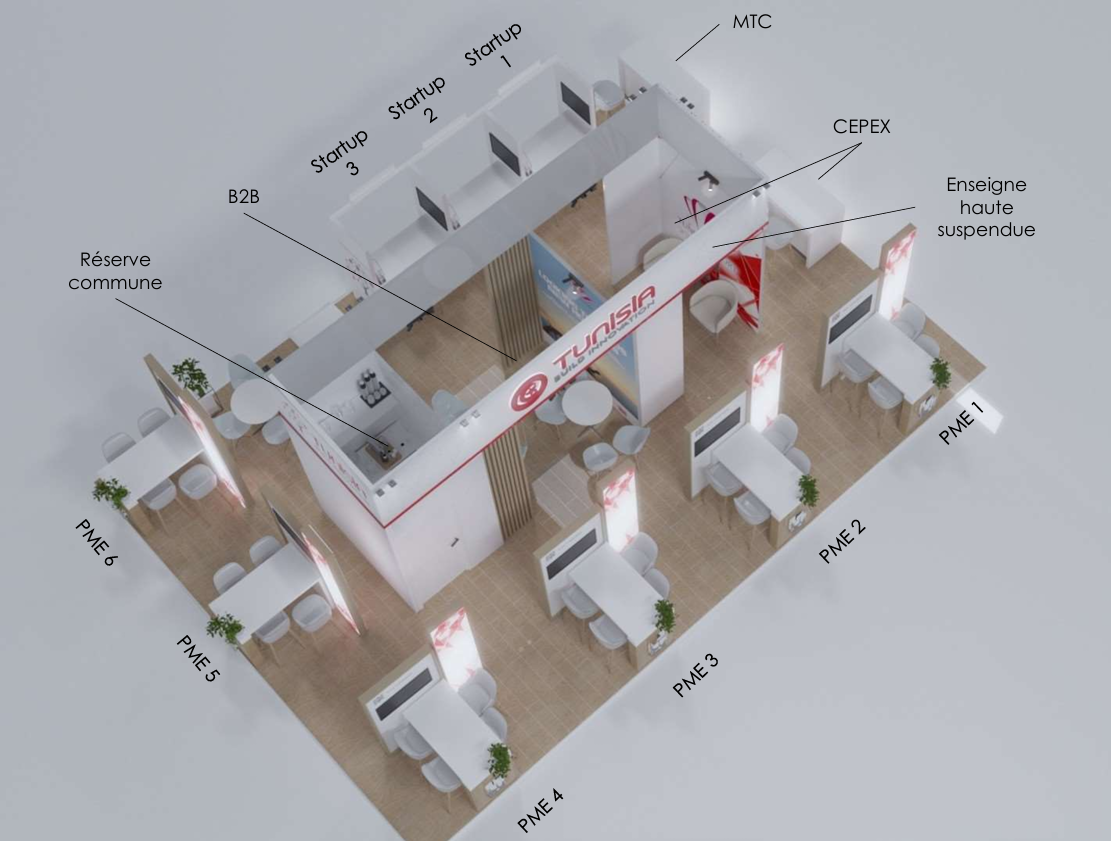
The brief called for a pavilion that would serve multiple simultaneous functions: an institutional representation space for CEPEX and the Ministry of Telecommunications, a collective exhibition platform for Tunisian SMEs, a startup showcase zone, a B2B meeting area, a VIP reception space, and a shared storage reserve. Each zone required its own spatial logic, lighting approach, and communication strategy while contributing to a unified national identity.
Understanding these requirements in depth before touching a design tool is what separates pavilion concepts that perform commercially from those that look impressive in a render but fail to serve their purpose on the show floor.
The Architectural Concept: Monumental Heritage in a Contemporary Language
The design concept for the Tunisia National Pavilion draws its inspiration from Tunisia's most significant architectural heritage. The Husseinid Palace, the Zitouna Mosque, and the Kasbah of Tunis all share a quality that transcends their historical period: presence. They are buildings that command attention through scale, verticality, and the confidence of their form.
This quality of monumentality was the starting point for the pavilion concept. Not as historical reproduction, but as a design principle reinterpreted in a contemporary architectural language. The result is a pavilion that communicates immediately as Tunisian without resorting to literal historical references. The architectural ambition of the concept translates the heritage reference into something forward-looking and innovative, which is precisely the message Tunisia needed to communicate at a technology trade show.
The design achieves this through a dominant volume standing 3.5 metres in height, conceived as an architectural landmark visible from all circulation axes of the GITEX Africa show floor. This verticality is deliberate and strategic. In a show environment where hundreds of exhibitors compete for visitor attention, height is one of the most powerful tools available to a pavilion designer. The Tunisia pavilion was designed to be a reference point that visitors could locate and navigate toward from across the hall.
Colour, Symbol, and Identity
The colour palette chosen for the Tunisia National Pavilion is not simply an aesthetic decision. It is a statement of national identity.
White dominates the pavilion structure, bringing light and clarity to the spatial design. Red accents punctuate the composition, referencing the Tunisian flag directly and giving the pavilion its distinctive visual rhythm. The combination of white, as a carrier of light and openness, and red, as a signal of energy and dynamism, creates a chromatic identity that is immediately recognisable and institutionally appropriate.
This colour strategy is reinforced by the pavilion's signage structure: a four-faced totem element rising 50 centimetres above the main volume, integrating the crescent and star of the Tunisian flag alongside an illuminated logo. The result is a 360-degree brand identifier that ensures the pavilion is recognisable from every direction on the show floor, communicating both national identity and commercial ambition in a single architectural gesture.
Spatial Organisation: Seven Zones, One Coherent Experience
The functional complexity of the Tunisia National Pavilion required a spatial organisation that could serve seven distinct zones without fragmenting the visitor experience or compromising the pavilion's visual coherence.
The zones were structured as follows:
CEPEX Institutional Space. The primary institutional representation area for the Centre de Promotion des Exportations, designed to communicate Tunisia's export capabilities and facilitate high-level government and institutional meetings.
MTC Institutional Space. The Ministry of Telecommunications presence within the pavilion, focused on digital transformation, connectivity infrastructure, and technology sector investment opportunities.
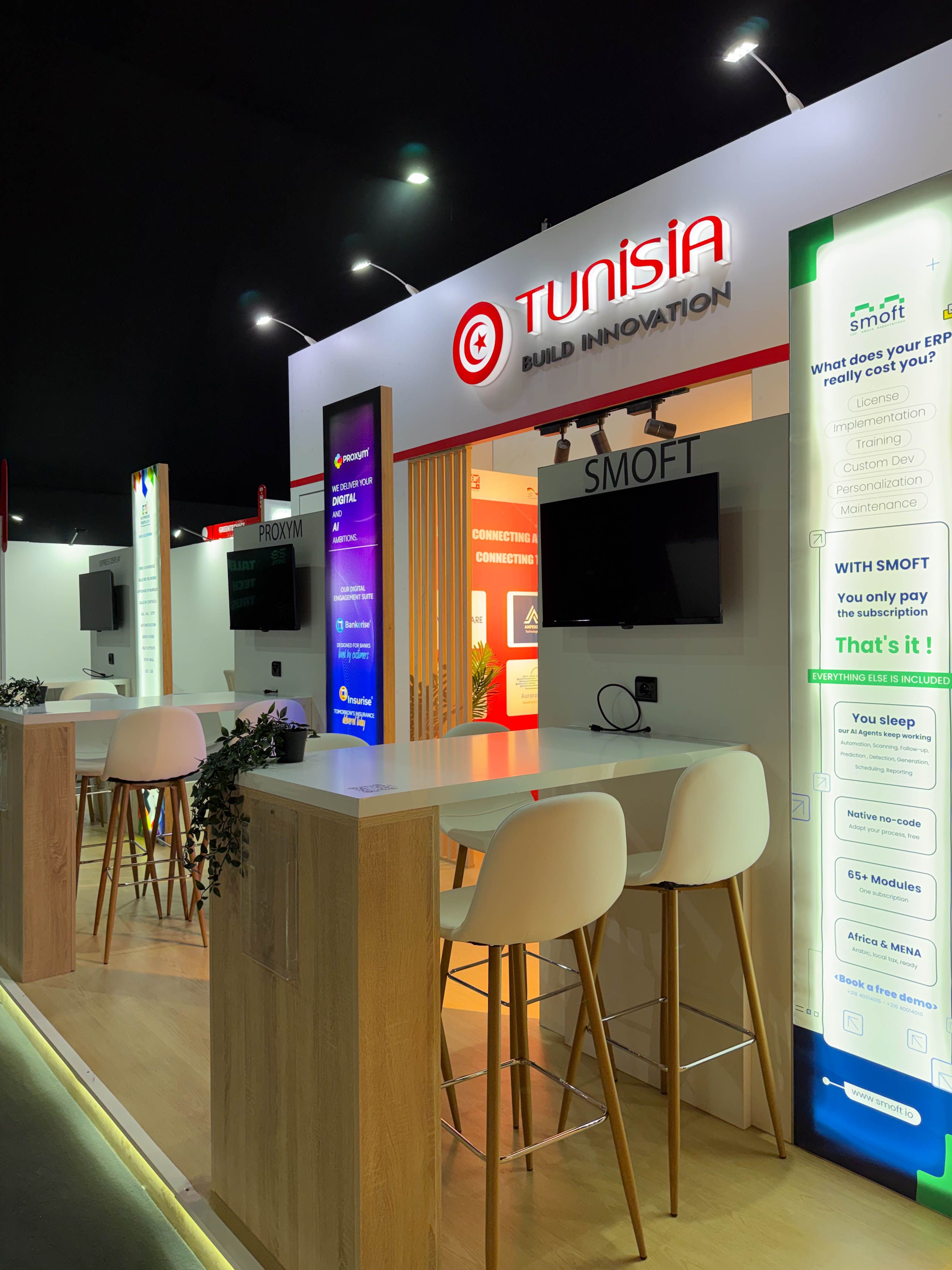
SME Exhibitor Spaces. Individual exhibition zones for Tunisian small and medium enterprises showcasing technology products and services to international buyers and investors attending GITEX Africa.
Startup Zone. A dedicated area for Tunisian technology startups, designed to facilitate investor conversations and partnership discussions within the framework of Africa's largest startup ecosystem event.
B2B Meeting Area. A structured meeting zone designed for bilateral commercial conversations between Tunisian companies and international partners, with appropriate acoustic separation and seating infrastructure.
VIP Reception Space. A dedicated area for high-level diplomatic and commercial reception, designed to accommodate ministerial visits and senior delegation engagements throughout the show.
Shared Reserve. A common storage and operational support area serving the pavilion's logistical needs across all zones.
Each zone was designed with its own lighting approach and spatial character while remaining visually and functionally integrated within the pavilion's overall architectural concept.
Lighting as Scenography
Lighting was treated from the beginning of the design process not as a technical afterthought but as a primary scenographic tool. In a large exhibition hall with hundreds of competing stands, lighting is one of the most powerful instruments available to create atmosphere, guide visitor movement, and communicate brand identity.
The lighting strategy for the Tunisia National Pavilion was structured around three distinct approaches working in combination.
Technical directional lighting was specified for functional zones: the institutional spaces, SME exhibition areas, and B2B meeting zone all received lighting designed for task clarity, communication legibility, and professional working conditions. Visitors reading product information, reviewing exhibition materials, or participating in B2B meetings needed lighting that supported these activities without visual fatigue.
Integrated LED systems were designed to emphasise the architectural lines of the pavilion structure, reinforcing the verticality and identity of the design through light. LED integration at the pavilion's structural edges and the illuminated totem element ensures that the pavilion maintains visual impact in the varying ambient lighting conditions of a large exhibition hall.
Indirect and ambient lighting was specified for reception and hospitality zones, creating warm and welcoming environments in the VIP area and B2B spaces that encourage extended conversation and comfortable interaction. The distinction between the bright, clear lighting of working zones and the warmer ambient lighting of hospitality areas creates a spatial rhythm that guides visitors through the pavilion's different experiential registers.
Photorealistic Visualisation as a Communication Tool
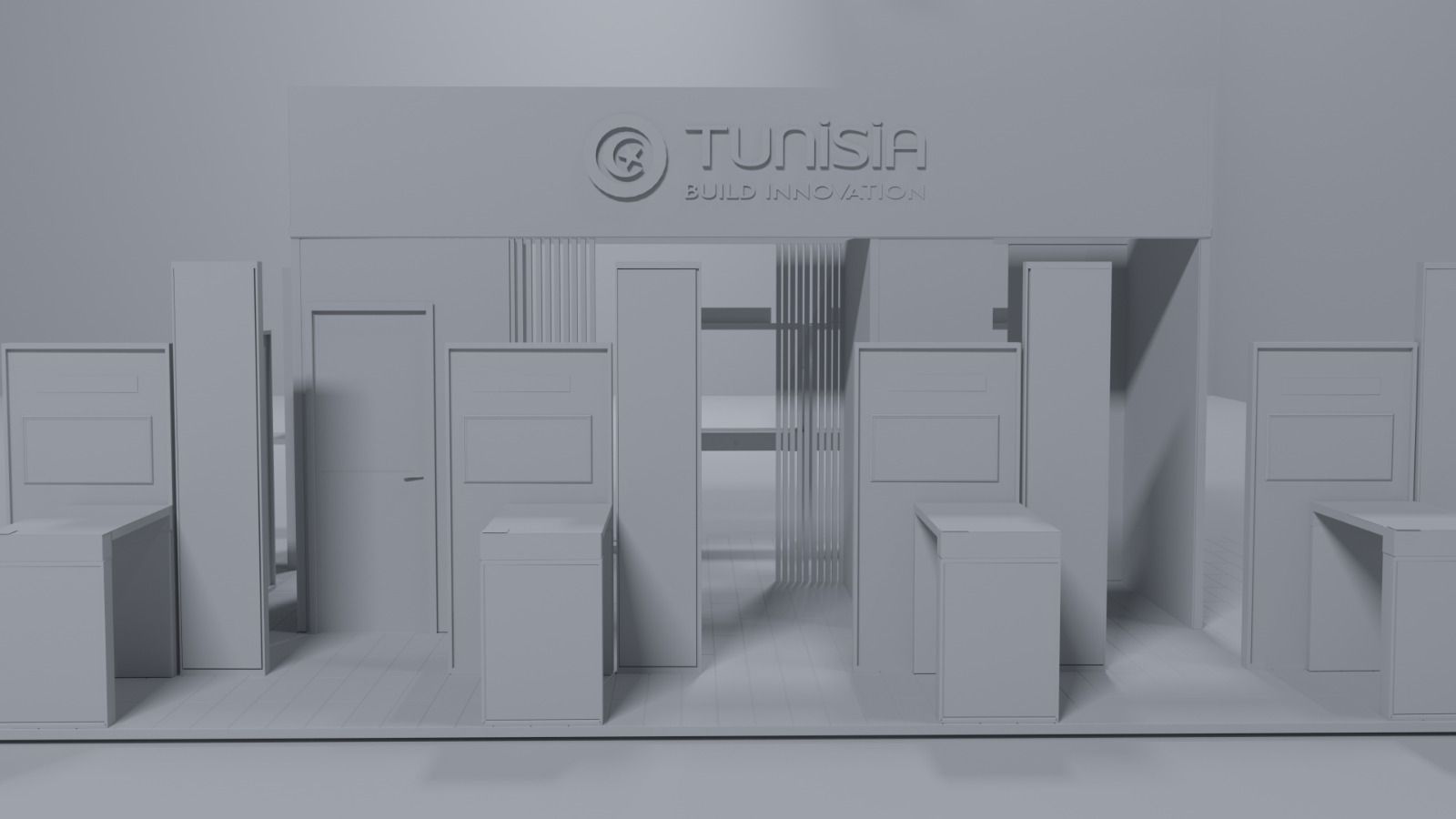
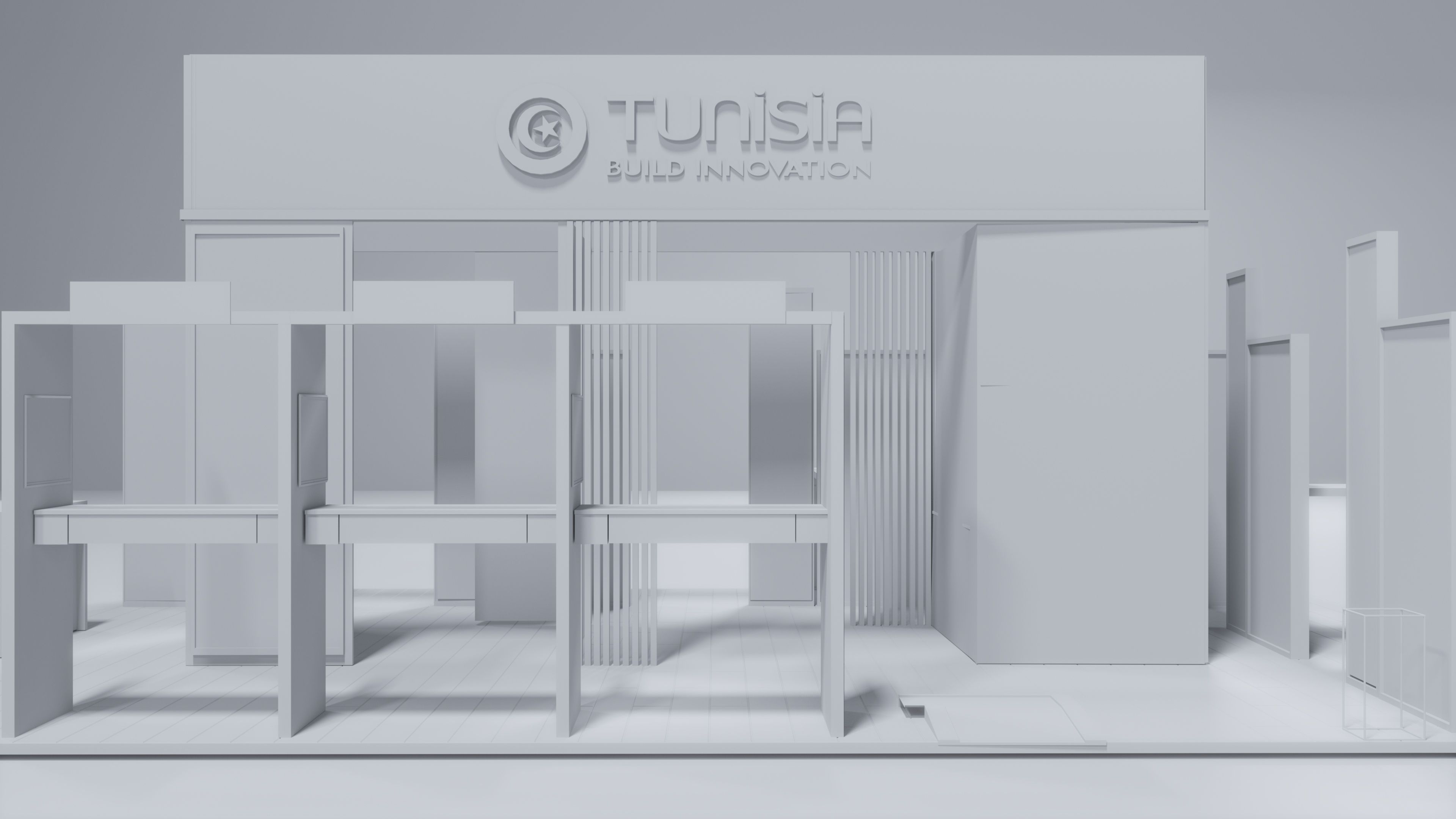
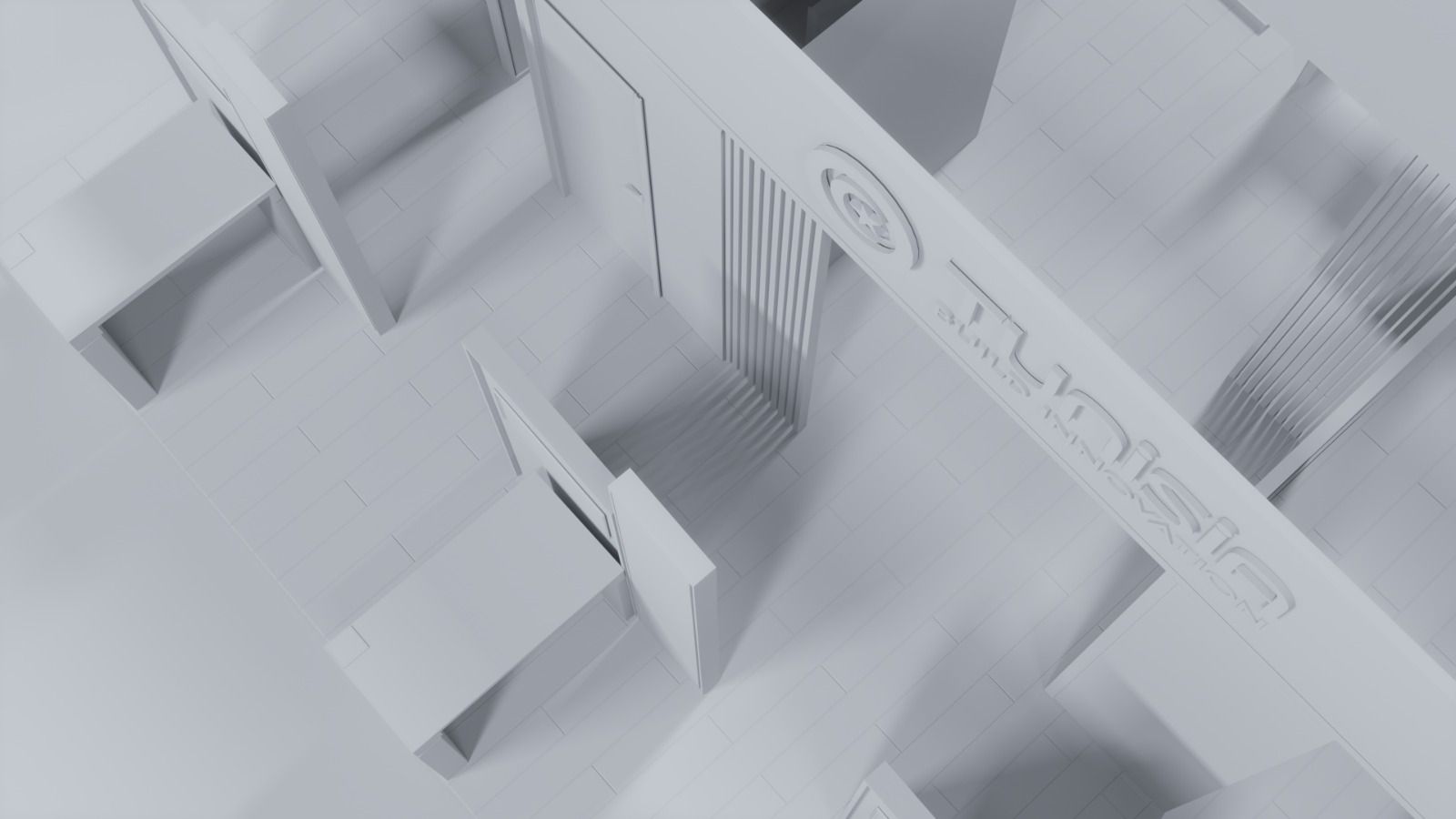
Before a single physical element was produced, the pavilion concept was communicated through photorealistic 3D renders that allowed the client to experience the design in detail before committing to production.
These visualisations served a critical function in the project timeline. By accurately representing the atmosphere, volumes, material finishes, spatial organisation, and lighting effects of every zone within the pavilion, they enabled productive client conversations about design choices, facilitated rapid decision-making, and identified potential issues before they became production problems.
The photorealistic render is not simply a sales tool. It is a project management instrument. It compresses the feedback loop between design intent and client approval, reduces revision cycles during production, and gives all stakeholders a shared reference point for the standard of quality they are working toward.
Production Under Pressure: Seven Days to Deliver
The most demanding aspect of the CEPEX GITEX Africa 2026 pavilion project was not its architectural complexity but its timeline. Despite the constraints imposed by the client's delivery schedule, EFFECT produced the complete pavilion over seven days of fabrication in Morocco, deploying a team on the ground in Marrakech for the full duration of production and installation.
Every element was fabricated to precise specifications. Materials were selected to ensure both the visual quality required by the design concept and the structural stability and safety standards required by the venue. The pavilion was installed on-site at the Mohammed VI International Exhibition and Convention Center over two days.
The discipline required to maintain design quality, material specification, and finishing standards under this kind of time pressure is what distinguishes experienced exhibition stand contractors from those who promise quality without the operational infrastructure to deliver it. The Tunisia National Pavilion at GITEX Africa 2026 was delivered on schedule and to specification.
The Result: A Landmark Presence at Africa's Most Important Technology Forum
The Tunisia National Pavilion at GITEX Africa 2026 achieved what the brief required: a presence that commanded the show floor, communicated national identity with architectural confidence, and created the spatial and functional conditions for productive commercial and institutional engagement throughout the three-day event.
More than 55,000 visitors from 145 countries attended GITEX Africa 2026. The Tunisia pavilion was among the most visible national representations at the show, fulfilling its mandate to position Tunisia as a credible technology hub and export platform on the African and international stage.
The pavilion demonstrated that exhibition design at its best is not simply a service. It is a form of national communication, and when it is done well, it opens doors that no catalogue, website, or digital campaign can replicate.